Home » Ivke
Category Archives: Ivke
The paper on in – situ LIBS measuring head accepted in Measurement Science and Technology
 The paper with core idea of IDEJE project NOVA2LIBS4fusion, the functional measuring head for in – situ low pressure LIBS applications, has been published in Measurement Science and Technology journal. With this publication, all work carried under this project has been published, and project was successfully brought to the end.
New publication by Nikola
Nikola’s work on his PhD thesis is now in full swing. We are pleased to share that a new paper entitled “Detection of hydrogen isotopes in fusion-relevant targets using laser ablation and microwave-induced plasma” related to his doctoral research has just been published in European Physical Journal Plus, in collaboration with our colleagues and partners from INFLPR Romania (LSPI Laboratory and EPPA Laboratory) as well as the Vinca Institute of Nuclear Sciences.
This achievement marks an important milestone in his research progress, and we are proud to see the continued success of this collaboration. We wish Nikola the very best of luck in his future work and look forward to the next results from his PhD journey.

Nikola’s first publication
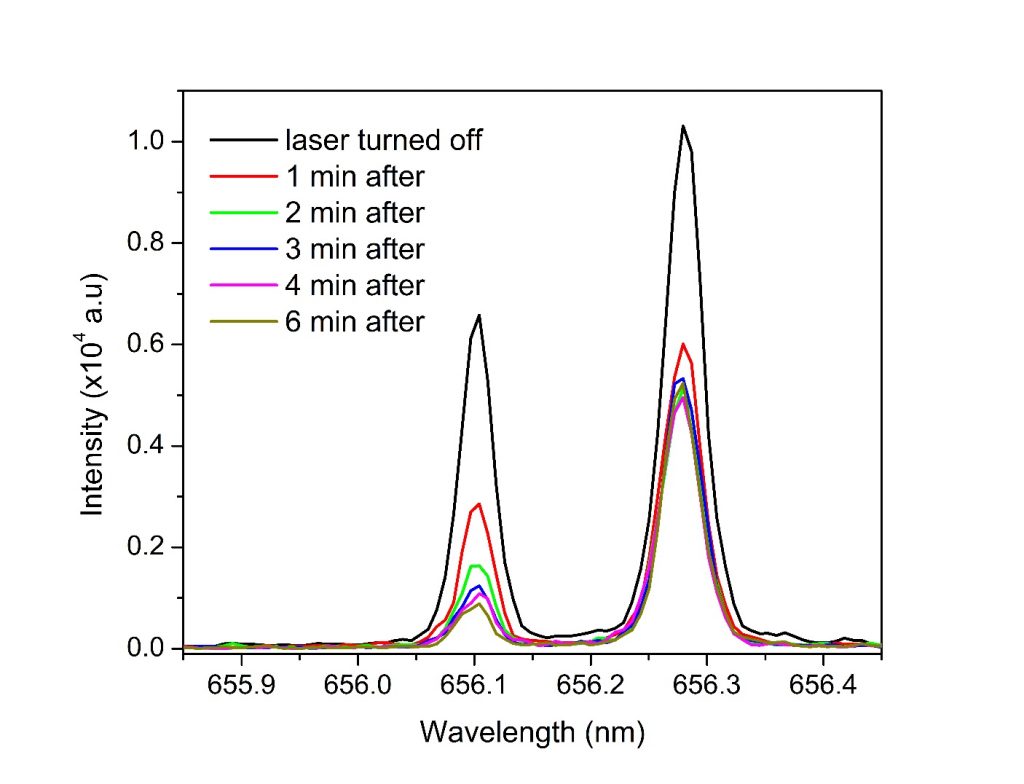
We are happy to inform you that Nikola has published his very first article together with Ivan, Bilja and Ivke from PSL lab and Dragan Ranković and Prof. Miroslav Kuzmanovic from Faculty of Physical Chemistry. Paper is entitled Hydrogen isotopes retention studies using laser and microwave induced plasma coupling (https://doi.org/10.1038/s41598-025-96546-x) and it was published in Scientific Reports.
New publication by Bilja, Ivan and Ivke
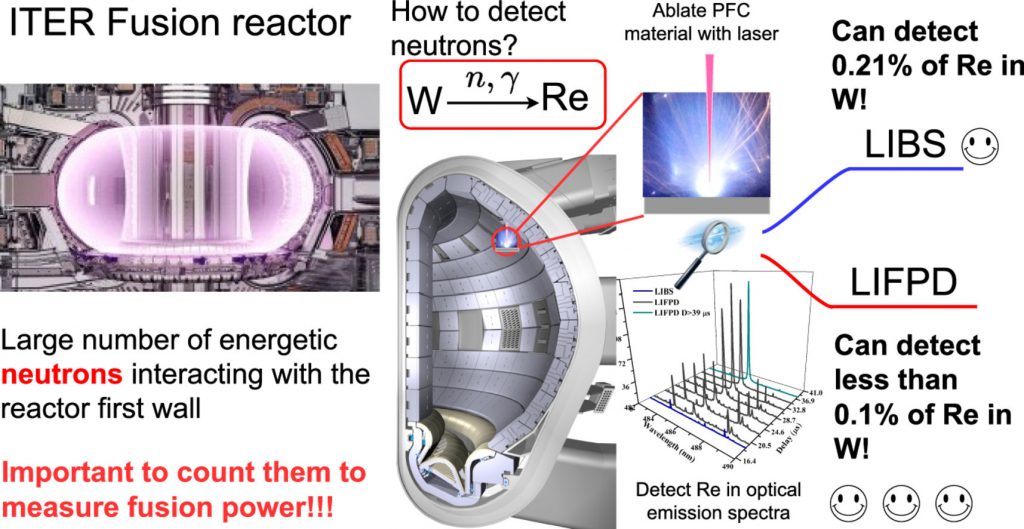
Bilja, Ivan and Ivke, together with our former colleague Marijana Gavrilović Božović published a paper about detection of absorbed neutrons in first wall of future fusion devices from measurements of Re content in WRe alloy using Laser Induced Fast Pulse Discharge (LIFPD). More about this on: https://doi.org/10.1016/j.fusengdes.2025.114943
Project NOVA2LIBS4fusion finished
We are proud to announce that the project NOVA2LIBS4fusion financed by the Science Fund of the Republic of Serbia is officially finished. The project had researchers from four institutions (IPB served as leading institution, along with Vinca Institute of Nuclear Sciences, Faculty of Physical Chemistry and Faculty of Engineering) working together on the improvement of the analytical capabilities of LIBS for the analysis of the plasma facing components (PFCs) of future fusion reactors, as well as its optimization for in-situ application. During the period of three years, we published 5 papers, while 4 are sent to relevant journals and peer review is underway.
Also, as the project has finished, our Head of the Laboratory, Ivke, went into retirement on the 1st February 2025. We wish him happy retirement, good health and all the best in the future!
New paper by Ivan, Bilja and Ivke
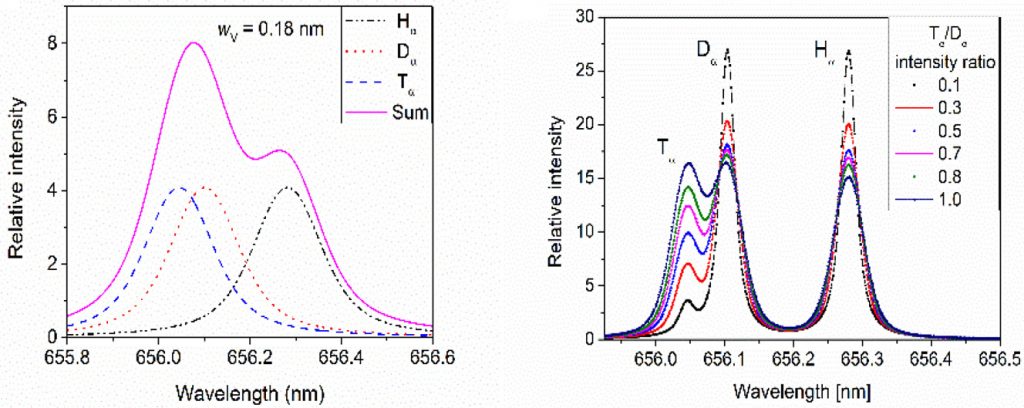
During the work on the realization of NOVA2LIBS4fusion project financed by the Science Fund of the Republic of Serbia Ivke, Bilja and Ivan published an article in Spectrochimica Acta B: Atomic Spectroscopy journal entitled Resolving studies of Balmer alpha lines relevant to the LIBS analysis of hydrogen isotope retention
SPIG 2024
Ivke, Biljana, Neša, Milica, Ivan and Nikola participated in 32nd Symposium of Physics of Ionized Gases (SPIG 2024), held in Belgrade at the Serbian Academy of Sciences and Art. Ivke was member of the Scientific Committee for the sixth consecutive time. Ivan was in the Ogranizing Committee, while Bilja served as the co – secretary of the conference.
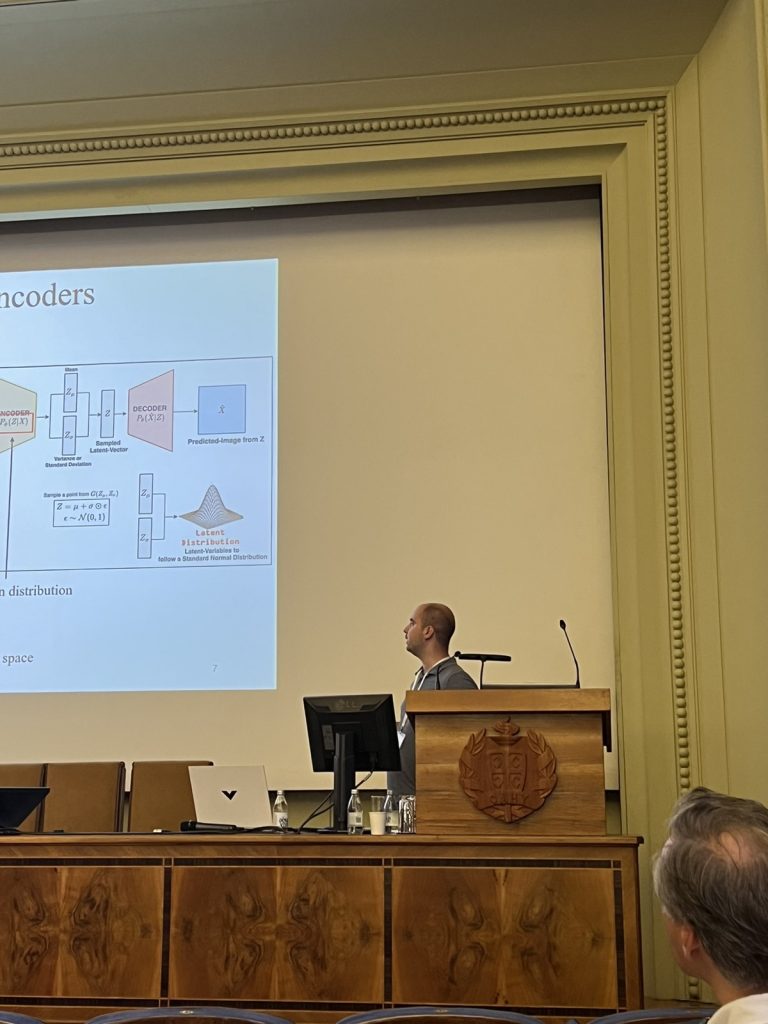
During the final day of the conference, Ivan gave a progress report lecture entitled “Application of Machine Learning and Artificial Intelligence in Plasma Spectroscopy“.
At the poster presentation part of the conference, Biljana presented the poster entitled “Fast Photography in the Service of Spatially and Temporally Resolved LIBS Diagnostics of Doped Tungsten”, while Ivan presented the posters entitled “Detection of Rhenium in Tungsten Using LIBS with Additional Fast Pulse Discharge” and “Influence of the Ablation Angle Change on Spectral Line Intensities in LIBS Experiments“. Apart from this, we also presented, or participated in the following posters:
Target Selection for LIBS Studies of Hydrogen Isotope Retention – Dragan Ranković, Biljana Stankov, Ivan Traparić, Miroslav Kuzmanović and Milivoje Ivković
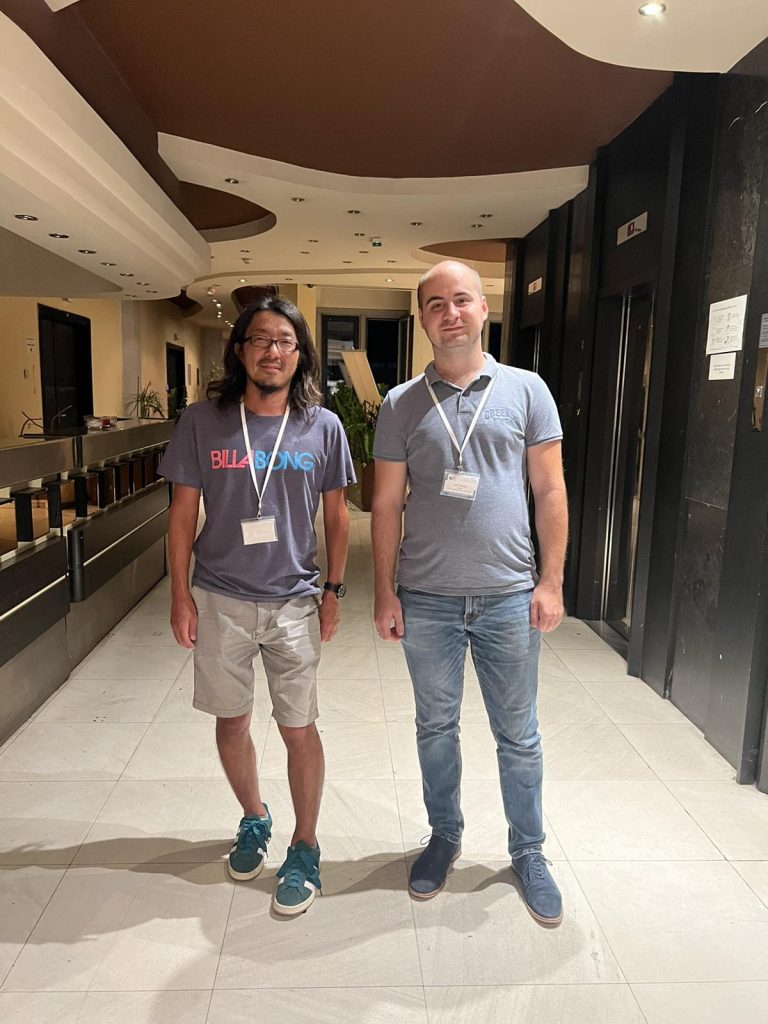
During the conference, we also had a pleasure of hosting our friend and collaborator Dr. Chihiro Suzuki – san from NIFS Japan, who gave a talk entitled “Comprehensive Z-dependence Analysis of Soft X-ray Spectra from Highly Charged Heavy Ions Using Magnetically Confined High-temperature Plasmas“.
Ivan participated in the ICSLS 2024 conference
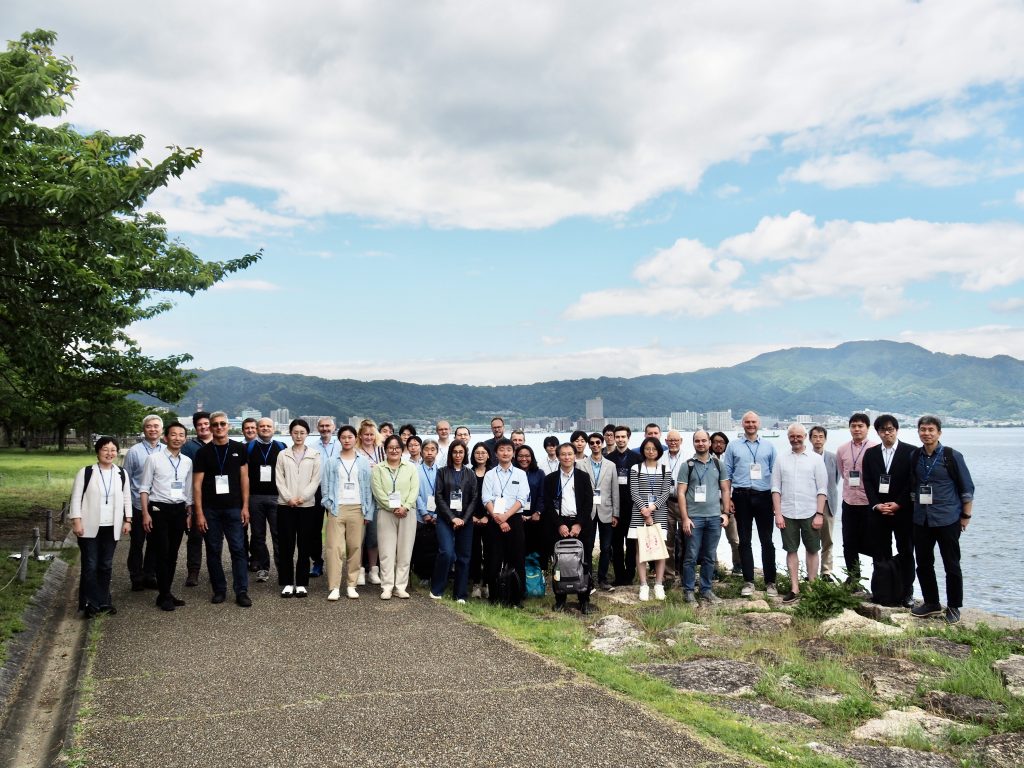
The ICSLS 2024 conference was held in Japan from 2nd to 7th June at Prefectural Budokan in Otsu. Ivan took part at this conference, where he had two posters. One poster was about the joint work with LHD colleagues on the application of generative artificial intelligence in modeling of emitted tungsten UTA structure in EUV spectral range. The second poster was the presentation of NOVA2LIBS4fusion project results regarding the study of separation of hydrogen and deuterium spectral lines relevant for tritium retention studies.
Finally, he also had the honor of visiting the NIFS facility in Toki. Here, he held a seminar about the results disseminated at the conference, and also took a tour of LHD device that is in operation at NIFS.
New publication by Ivke, Bilja and Ivan
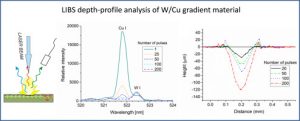 During the work on the realization of NOVA2LIBS4fusion project financed by the Science Fund of the Republic of Serbia Ivke, Bilja and Ivan published an article in Spectrochimica Acta B: Atomic Spectroscopy journal entitled LIBS depth-profile analysis of W/Cu functionally graded material
Ivan’s new publication
 We are pleased to announce that Ivan, together with Ivke has published the article entitled Determination of austenitic steel alloys composition using laser-induced breakdown spectroscopy (LIBS) and machine learning algorithms in European Physical Journal D (EPJ D).